Screen against every list your policy requires.
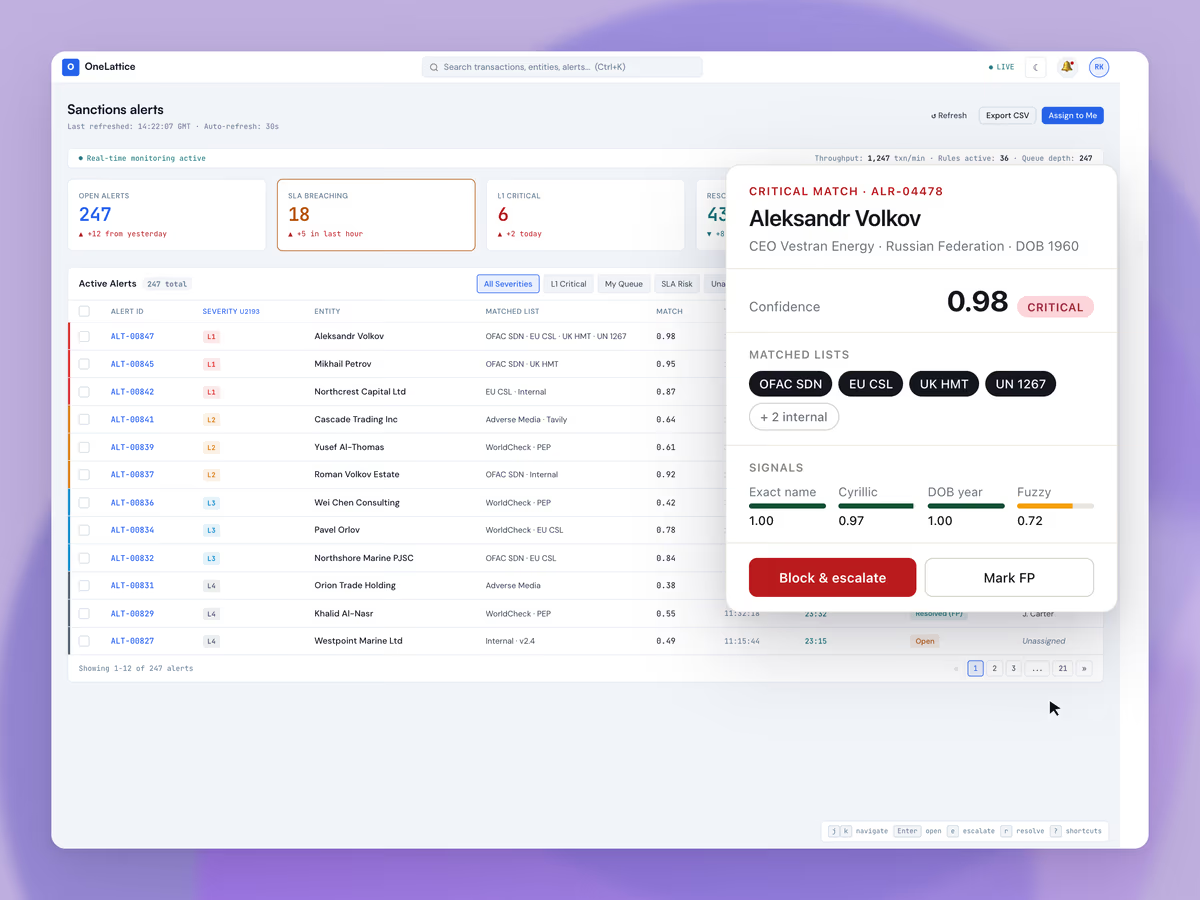
Sanctions, watchlists, PEPs, and internal lists. Re-screen the book the moment a list changes, with a decision trail on every alert.
WHY ONELATTICE
Sanctions screening that holds up.
A sanctions hit is only as defensible as the data underneath it, the list version that fired, and the connections it sits inside.
Sanctions data we own.
GraphIntel is OneLattice's in-house sanctions, PEP, and adverse-media data, built and maintained by our data team. No third-party feed sitting between your decision and the regulator.
See our dataAudit the list, not just the match.
Every list update logs the source, the version, the operator who approved it, and the moment it went live. Full provenance on every entity, ready for the regulator.
See data provenanceCatch the names hidden in the network.
The cross-customer graph surfaces ownership chains, related parties, and the front companies that single-account screening can never produce.
See network analysisSee what drives every screening decision.
Scope every list by policy. Version-control your internal ones.
Subscribe to lists globally or narrow each by region, product line, or customer risk tier. Upload internal blacklists and counterparty files alongside them. Govern who can edit them.
Admins version each list and attribute it to the publisher. A decision made six years ago maps back to the exact list revision behind it.
See list selection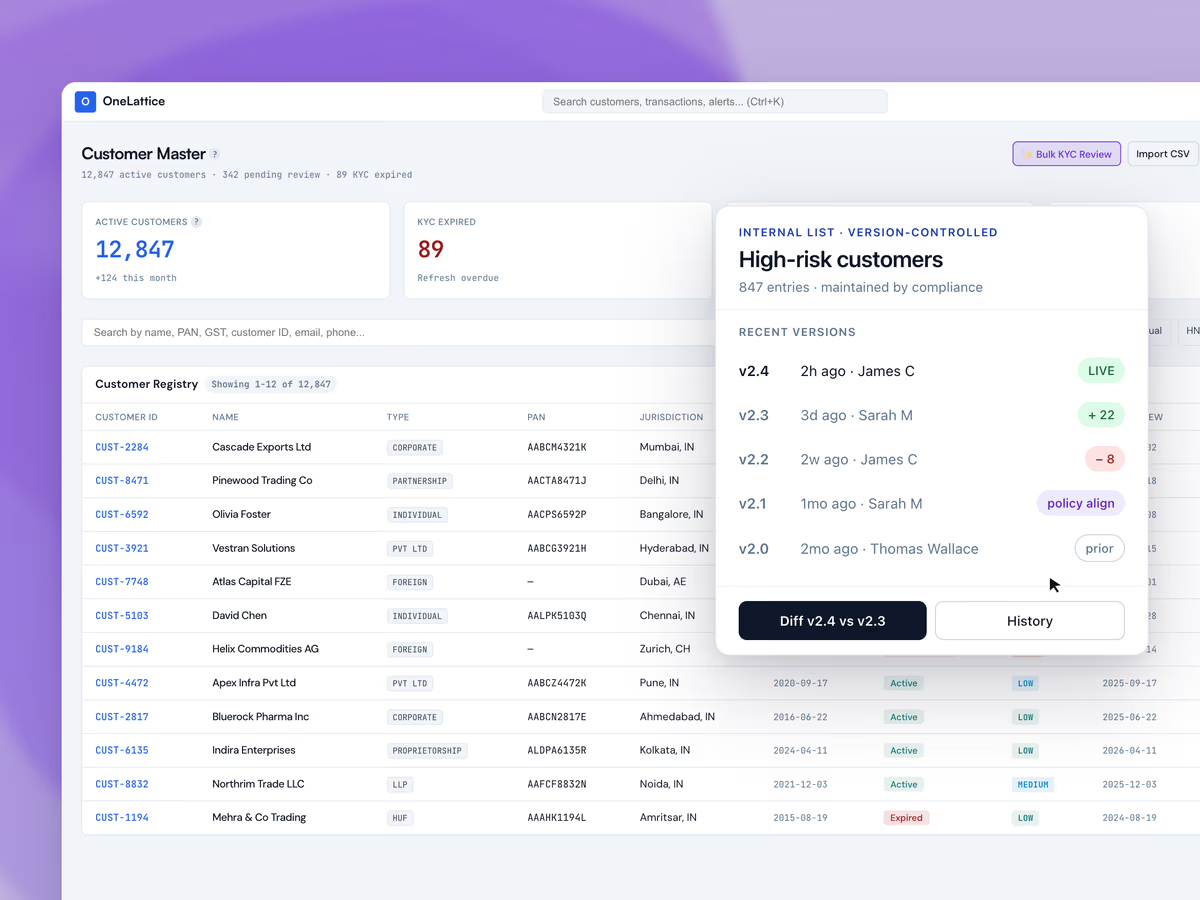
Run four matching techniques in parallel. Every hit shows which one fired.
A weighted ensemble scores each name across exact match, edit distance, phonetics, name-order variants, and corporate-form normalization. Every alert names the rule that fired and its contribution to the score.
Tune weighting in a sandbox before promoting to production. The audit log captures author, effective date, and the previous configuration.
See the matching engine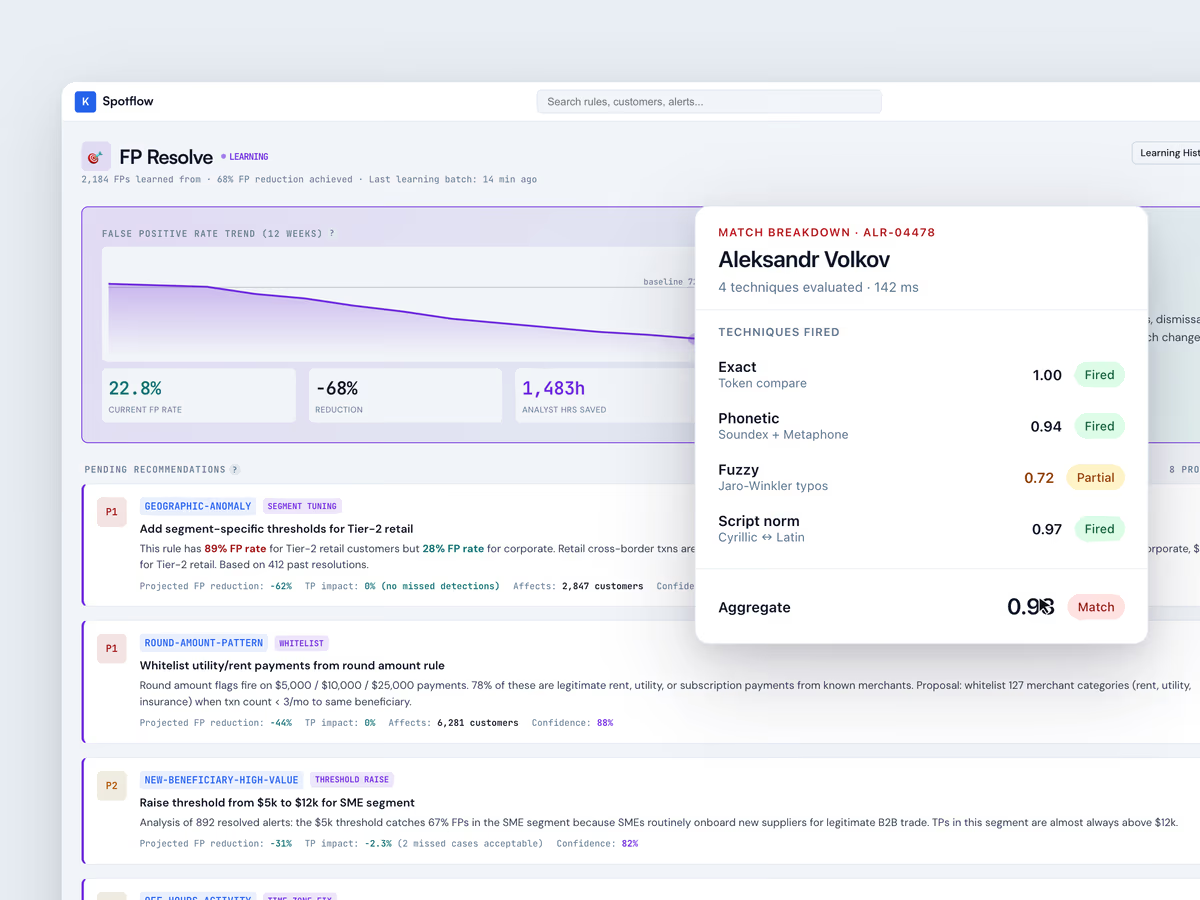
Match Arabic, Cyrillic, Chinese and Hebrew in original script and romanized form.
Transliteration runs both ways. A Cyrillic name on a UN list matches its English spelling on your customer record, and the Russian original stays on the alert so analysts see what the list said. Misspellings, nicknames, and reversed family-name conventions produce explainable matches.
Coverage spans 80+ languages and non-Latin scripts, with transliteration tuned per script rather than a single global model. Every hit records the linguistic rule that produced it.
See language coverage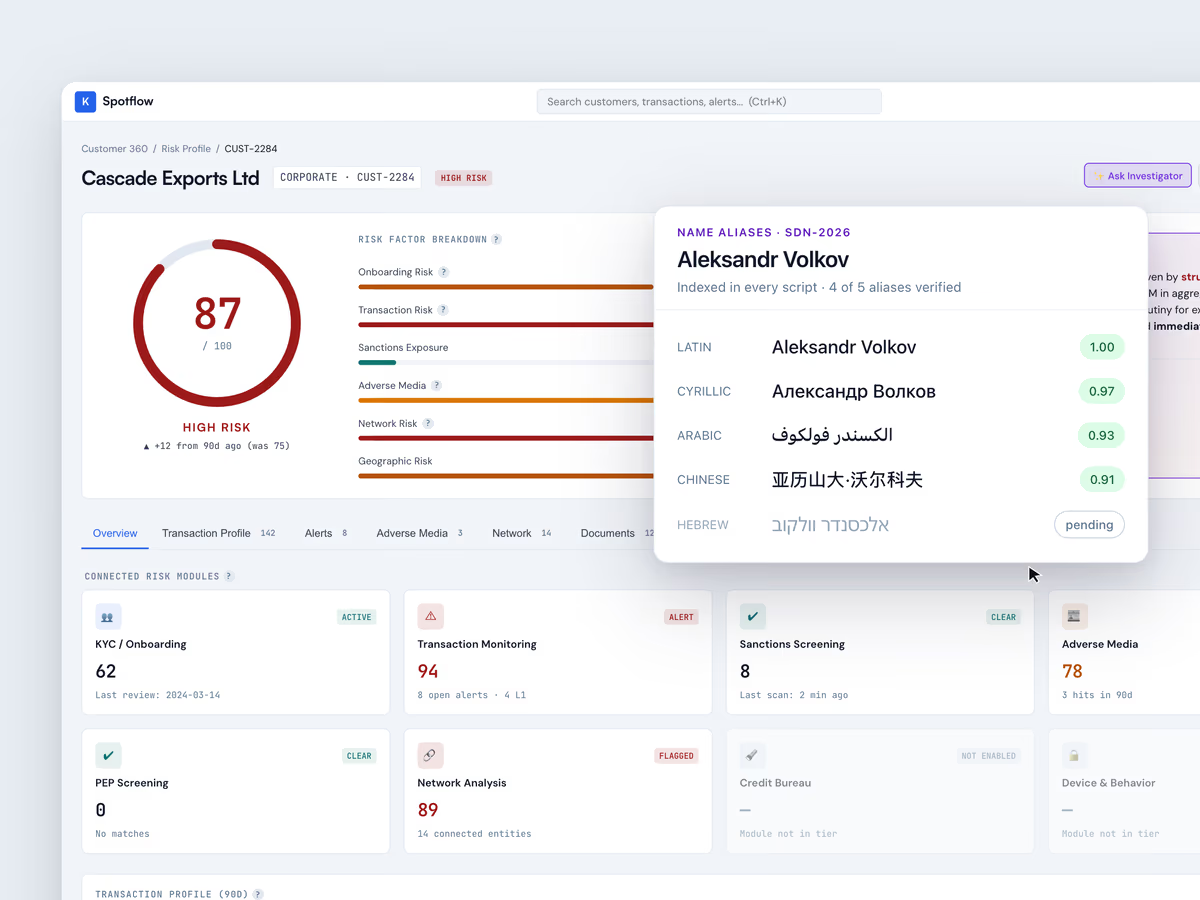
See each list's publication, ingest, and live-index timestamps.
See when the regulator published, when OneLattice ingested the change, and when your live index caught up. Every alert logs the list revision behind the evaluation. Answer any examiner question by querying the audit trail directly. No reconstruction, no exports from three systems.
Ingest runs from the official regulatory source. The hash of every payload is retained with the list revision.
See the audit model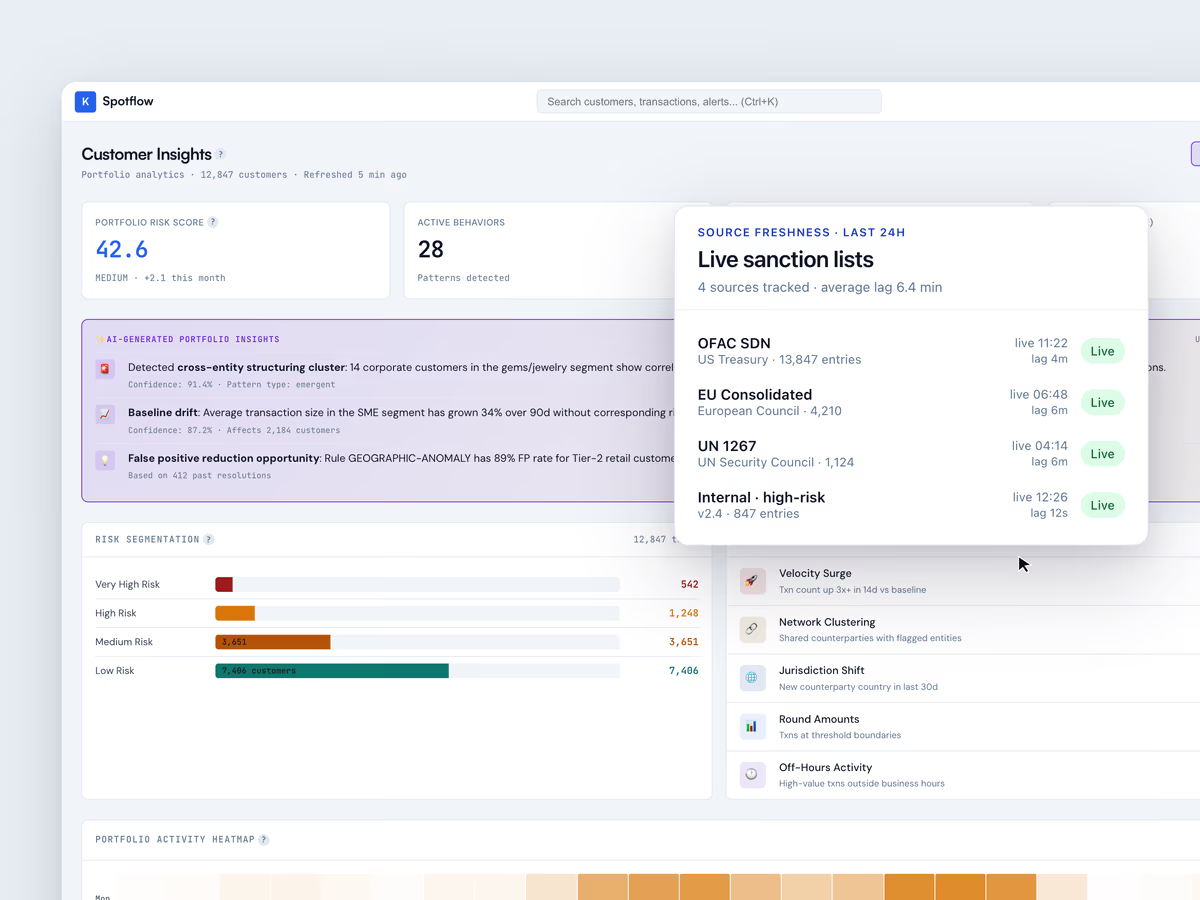
Read the reasoning on every alert.
Each match returns the list, the rule that fired, and the score. It also returns the secondary identifiers that confirmed or weakened the match and the prior decision history for the same subject. The full packet exports as PDF or JSON for examiner review.
Every alert ships with its rationale by default.
See the audit packet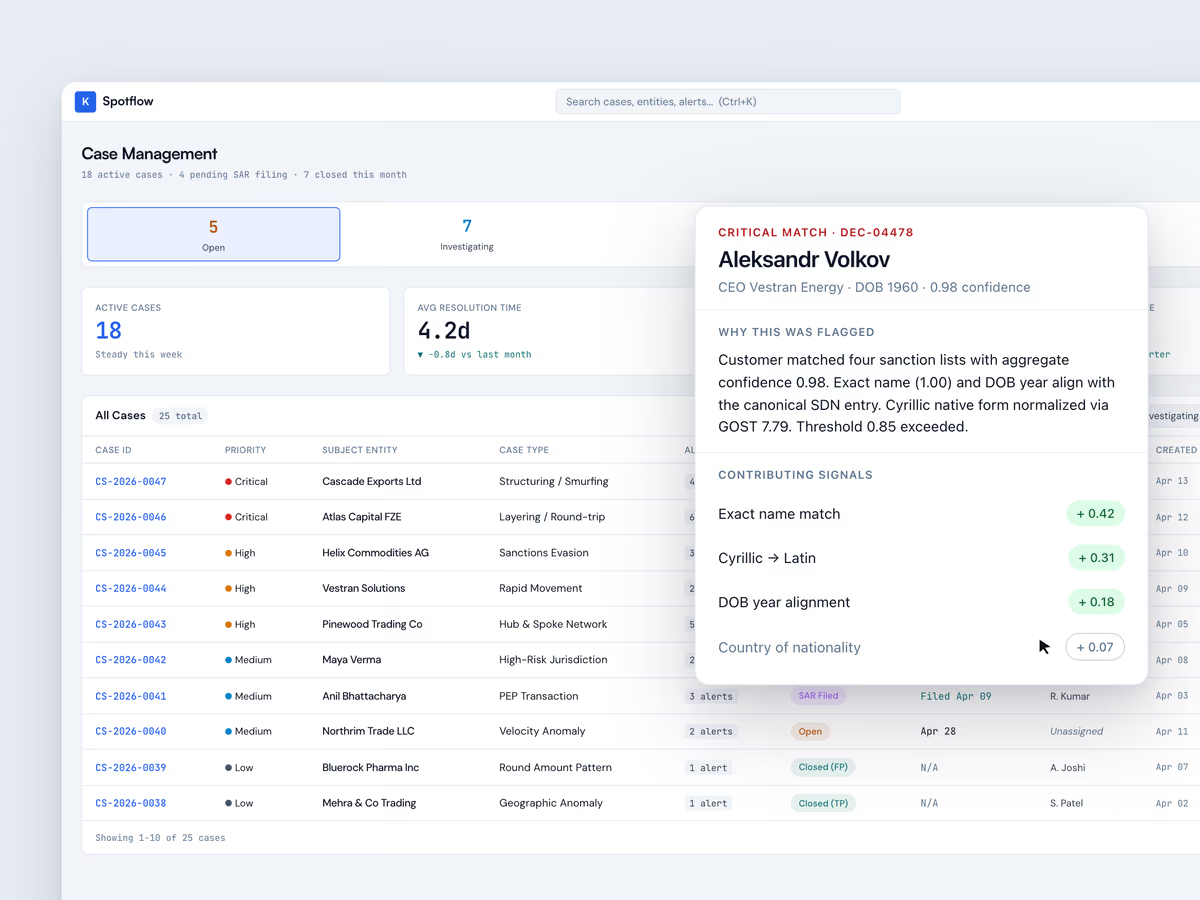
DEPLOYMENT
Plug OneLattice into the stack you already run.
API-first, batch where the book demands it. Case files your regulator can read.
Choose API or batch
Call the screening endpoint inline at onboarding, or run overnight batches against the full book. The same engine, the same rules, the same audit output either way.
Export case files in your regulator's format
Alerts, evidence, decisions and reviewer identity export as a regulator packet formatted for SAR/STR filing. Integrates with the case system you already have or stands alone.
Tune thresholds to your book
Configure match thresholds by list, jurisdiction, customer segment and product. Back-test against historical alert volume in a sandbox before promoting. Versioning captures each change, so the threshold in force on any given alert is always retrievable.
PLATFORM
Pair sanctions screening with the rest of the OneLattice stack.
One platform across onboarding, fraud, and AML.
Adverse Media
Negative news monitored on every customer, scored, and surfaced as risk shifts.
Learn more →PEP Screening
Politically exposed people, relatives, and close associates screened against curated sources.
Learn more →Investigation & Reporting
SAR drafts, audit-ready exports, and the trail attached to every case.
Learn more →Agents on this workflow.
OneLattice's purpose-built agents that handle this work end-to-end.
Screening Analyst
Sanctions, PEP, and adverse-media checks on OneLattice's GraphIntel data.
FP Resolver
Clears name mismatches, transliteration, weak matches against your client SOP.
Entity Resolver
Unifies aliases, transliterations, near-matches into one entity view.
OSINT Analyst
Open web, social, news, registries on flagged entities.